
High school and college students are identified as a group greatly affected by sleep difficulties (Buboltz, Brown, & Soper, 2001). Sue Adams’ study, on more than 200 students at a university, found students only get 7 hours of sleep when they actually need 9 hours and 15 minutes of sleep each night (Rice, 2011). Rice also mentions that students lose 45 minutes of sleep a night due to cell phone usage adding to the sleep deprivation (Rice, 2011). Lack of sleep is associated with higher rates of anxiety and depression among other symptoms (Rice, 2011). Poor sleep habits also attribute to academic difficulties, such as lower test scores and problems with concentration (Buboltz et al., 2001).
Monday, December 1, 2014

Childhood Obesity: A Winnable Battle
Childhood Obesity: A Winnable Battle
Group 22
Poor nutrition and the lack of healthy food options available to young children and adolescents is a major contributing factor that leads to childhood obesity and poor developmental health in children. Early childhood is dependent on healthy food; many children who did not have access to nutritious food when they were maturing are more likely to be hospitalized due to nutritional deficiencies (Children’s Defense Fund, 2012). Further, a study found that preschool and elementary aged children have a higher chance of developing anxiety problems as a result of food insecurity than their food secure counterparts.
 Various sectors of our society affect the health of our children, such as families, schools, governmental agencies, community organization, the media and more. The school setting plays a very crucial role in the health and development of children, being that that's where students grow and develop throughout the years. This environment determines the opportunities and access to future resources, ultimately, shaping their lives as adults. Simultaneously, School is a determinant sector where this issues can be actively addressed; from the implementation of a healthier menu option, to the education about healthy eating. According to the CDC’s report on the role of schools in preventing childhood obesity, there is a 10 key strategy plan schools can use to improve health nutrition and increase physical education. It is largely focused on identifying the important resources needed and the challenges faced at a larger scale.
When addressing childhood obesity from the institution of public education it is very important to identify the way that the social determinants of health play in this issue. The fact that a population of kids is already predetermined to have access to completely different foods from the moment that they are born, reflect the way social inequalities affect the individual’s choices.
Chronic Low Back Pain in College-Aged Students
College students spend a long time sitting in class, reading, or working on computers, and a sizable number of students experience back pain throughout their academic careers. This can end up being a huge problem for students as they get older. Studies have shown that low back pain is one of the leading causes of disability (University of Illinois Mckinley Health Center, 2010). It occurs in similar proportions in all cultures, interferes with quality of life and work performance, and is the most common reason for medical consultations. Few cases of back pain are due to specific causes; most cases are non-specific. Acute back pain is the most common presentation and is usually self-limiting, lasting less than three months regardless of treatment (University of Illinois Mckinley Health Center, 2010). Cross-sectional data demonstrate that initial onset of lower back pain is expected to occur around the mean age of 30, and peaking in occurrence between the ages of 45 and 60 years. However, lower back pain is common in both older and younger adults, especially active students (Brennon, Graham, & Shafat, 2007). Lower back pain is ranked first as a cause of disability and inability to work, and is expected to affect up to 90% of the world’s population at some point in their lifetime. The annual first time incidence of lower back pain is roughly 5%, and the annual prevalence (i.e. those suffering at time of questioning) is between 15 and 63%. Prospective studies demonstrate that low back problems do not display a six-week spontaneous recovery pattern, as was once believed. The condition is regularly seen to worsen over time, becoming a chronic disorder, influenced by both physical and psychosocial factors (Brennon, Graham, & Shafat, 2007).
Alcohol Abuse: College Students’ Usage and How to Combat the Epidemic
Group
#9
Nicole
Petiet
Nozomi
Nakazawa
Joe
Lopez
Stacy
Pfiefer
Kari
Fiori
Alcohol Abuse: College
Students’ Usage and How to Combat the Epidemic

The National Institute on Alcohol
Abuse and Alcoholism (2014) defines moderate drinking as “up to 1 drink per day
for women and up to 2 drinks per day for men,” (1). Alcohol use exceeding
this number is considered abuse, although lower levels might be considered
abuse on a case-by-case basis. The NIAAA (2014) defines binge drinking as “a
pattern of drinking that brings blood alcohol concentration (BAC) levels to
0.08 g/dL… [which] typically occurs after 4 drinks for women and 5 drinks for
men—in about 2 hours,” (2). SAMHSA (2014) defines binge drinking as
“drinking 5 or more alcoholic drinks on the same occasion on at least 1 day in
the past 30 days,” and heavy drinking as “drinking 5 or more drinks on the same
occasion on each of 5 or more days in the past 30 days (3). Alcohol
abuse can be observed in college populations all over the country. Alcohol is
the most commonly abused drug among underage drinkers (more than half of college
students), and more than 90% of alcohol consumed is during binge drinking (4). The data on alcohol abuse among college students is striking,
and we, as current and former college students, have all observed this behavior
first-hand.
Lung Cancer and Tobacco Use
Overview
Lung
cancer is the uncontrolled growth of abnormal cells in the lungs; it can affect
one or both lungs. These cells do not develop into healthy lung tissue like
normal cells do which can lead to tumors, causing the lungs to function inappropriately.
The two most common types of lung cancers are Non-small cell lung cancer
(NSCLC), and small cell lung cancer (SCLC). Lung cancer is one of the most
common cancers in the world. According to the American Cancer Society “Lung
cancer accounts for about 27% of all cancer deaths and is by far the leading
cause of cancer death among both men and women” and for 2014 there will be an
estimated 159,260 deaths from lung cancer. This is a huge problem that we are
facing and a lot can be done to bring these numbers down. Preventions are
available in many different methods from the help of the government to community and individual interventions. Lung cancer is treatable and curable, and in some cases preventable.
There
are many causes of lung cancer but the main risk factors are
cigarette smoking, secondhand smoke, radon, and personal or family history. The
leading the cause of lung cancer in the United States is smoking; the Centers for Disease Control and Prevention (CDC) states that “cigarette smoking is linked
to about 90% of lung cancer”. You can find a toxic mix of more than 7,000
chemicals in tobacco smoke. The smoke from cigarettes, cigars or pipes can
cause lung cancer; people who inhale this smoke are practically smoking. According to the CDC (2014) “In the United States,
two out of five adults who don't smoke and half of children are exposed to
secondhand smoke, and about 7,300 people who have never smoked die from lung cancer
due to secondhand smoke every year”. The sad fact is that tobacco is killing
our population. Radon is another risk factor; this gas comes from rocks and
dirt and can be found in homes and buildings, it cannot be smelled or seen. The
CDC states that “Nearly one out of every 15 homes in the U.S. is thought to
have high radon levels” and many people are not aware of the deadly killer.
There are other substances that can be found in many workplaces like asbestos,
arsenic, diesel exhaust, some forms of silica and chromium. Many
of these risk factors can be avoided by changing your lifestyle or making sure
policies are put in place so people can live and work in clean environments.
Social
Determinants Linked with Lung Cancer
The social determinants of health are the
conditions in which people are born, live, work and age. These circumstances
are shaped by the distribution of money, power and resources at global,
national and local levels. Social determinants encompass social and economic
conditions such as poverty and the conditions of work and healthcare delivery;
also the chemical and pollutants associated with industrial developments and
the environments where we work. Social determinants play a significant role
because of their indirect effects through individual risk factors and behaviors
that correlate (WHO, 2014).
All of the social determinants
influence us and the way we grow up and the decisions that we make. Whether we
realize it or not, everything is affecting us and the behaviors we chose to act
upon. Behaviors are often the mediating steps
between social determinants and cancer outcomes. Some behaviors long-recognized
as important contributors to cancer include tobacco and alcohol use, poor diet,
physical inactivity, high-risk sexual behaviors, and occupational
hazards. (WHO, 2014)
Cigarette
smoking is the number one risk factor for lung cancer. In the United States
alone, cigarette smoking is linked to about 90% percent of lung cancers.
Cigarettes are definitely not the only cause of lung cancer, pipes and cigars
are also major risk factors. There are about 7,000 chemicals that make up
tobacco smoke, making it extremely toxic. Most of the chemicals are poisonous
and at least 70 are known to cause cancer (CDC, 2014). Tobacco use is the single
largest preventable cause of death and chronic disease in the world today,
causing 5.4 million deaths in 2005. It is a risk factor for six of the eight
leading causes of death, including heart disease and several cancers and lung
diseases. Tobacco use disproportionately affects males and lower socioeconomic
groups in developed and developing countries, and is increasingly prevalent in
poorer parts of the world. In developed countries, multiple social
disadvantages contribute independently to smoking status. Poor households in low-income countries
carry a particularly heavy burden from tobacco use, with significant health,
educational, housing and economic opportunity costs (CDC, 2014).
There
are two stages of life where inequities in vulnerability and exposure to
tobacco use are most evident: sadly, during adolescence, with those from lower
socioeconomic backgrounds most at risk of taking up tobacco; and during
adulthood, especially young adulthood, where tobacco use cessation is more
difficult for those from disadvantaged backgrounds. At both stages,
vulnerabilities such as social, psychological and physical health issues and
disproportionate levels of exposure due to family and peer tobacco use,
targeted advertising, social norms permissive to tobacco use and less access to
affordable cessation services often tip the balance towards tobacco use take-up
and continuation. Tobacco use is supported by a vast network of business and
commercial interests (CDC, 2014).
Tobacco use is
a choice. Tobacco use is a public health problem because it has been
intentionally built into the social structure and environment of most societies
by an industry that profits from continued trade in tobacco products. Not only
is smoking detrimental to your own health, but it is also hazardous to those
around you (CDC, 2014). Second hand smoke is almost unavoidable. Most exposure to secondhand smoke occurs in homes and
workplaces. Secondhand smoke exposure also continues to occur in public places
such as restaurants, bars, and casinos, as well as multi-unit housing and
vehicles. Eliminating smoking in indoor spaces is the only way to fully protect
nonsmokers from secondhand smoke exposure. Separating smokers from nonsmokers,
although it sounds like a good plan, when people share the same air space,
cleaning the air, opening windows, and ventilating buildings does not eliminate
secondhand smoke exposure. Nonsmokers who are exposed to secondhand smoke at home
or work increase their lung cancer risk by 20–30%.Secondhand smoke exposure
causes an estimated more than 7,300 lung cancer deaths annually (for 2005–2009)
among adult nonsmokers in the United States. African-American male workers,
construction workers, blue collar workers and service workers are some of
the groups who continue to experience particularly high levels of secondhand
smoke exposure relative to other workers (CDC, 2014).
Health starts in our homes,
schools, workplaces, neighborhoods, and communities. We know that taking care
of ourselves by eating well and staying active, not smoking, getting the
recommended immunizations and screening tests, and seeing a doctor when we are
sick all influence our health. Our health is also determined in part by access
to social and economic opportunities; the resources and support available in
our homes, neighborhoods, and communities; the quality of our schooling; the
safety of our workplaces; the cleanliness of our water, food, and air; and the
nature of our social interactions and relationships. The conditions in which we
live explain in part why some Americans are healthier than others and why
Americans, generally, are not as healthy as they could be (Healthy People, 2014).
Evidence
Based Programs and Policy Interventions and Effectiveness
CDC
–
The Division of Cancer Prevention and Control (DCPC) is working to prevent and
control lung cancer by—
- · Gathering critical information about diagnoses and deaths from lung cancers in the United States.
- · Supporting programs in states, tribes/tribal groups, and U.S. areas that struggle to prevent and regulate tobacco use and endorse a healthy diet.
- · Applying public health interventions and counter marketing tactics to reduce smoking.
- · Upholding a lung cancer Web site (Cancer Prevention and Control, 2013).
NationalCancer Institute - Population-level
interventions
In
addition to independently focused cessation efforts, a number of tobacco control
approaches at the community, state, and national level have been recognized
with reducing the commonness of smoking. Strategies include the following:
- · Reducing minors’ access to tobacco products.
- · Distributing effective school-based prevention programs together with media strategies.
- · Raising the price of tobacco products by raising taxes.
- · Using tobacco excise taxes to supply and fund community-level interventions including mass media.
- · Providing verified quitting strategies through health care organizations.
- · Adopting smoke-free regulations and policies (Lung Cancer Prevention, 2014).
Educating
individuals on what smoking can do to your body is the first step in having a
successful intervention. The Surgeon General’s report on smoking and health, which
summarized more than a decades worth of research on the adverse health effects
of tobacco use, helped the use of tobacco decline considerably. The effect of
subsequent education and tobacco control efforts has been considerable with an
estimated 200,000 premature deaths avoided in the period from 1964 to 1978.
Anti-smoking
Ads are proven to be extremely effective. The first year of the federal
government’s “Tips from Former Smokers” national advertising campaign exceeded
all expectations, driving 1.6 million smokers to try to quit and helping more
than 100,000 to succeed, according to a study published today in the medical
journal The Lancet. The 2012 campaign, conducted by the U.S. Centers for
Disease Control and Prevention (CDC), also inspired millions of nonsmokers to
encourage friends and family members to quit smoking. Researchers estimated
that, by quitting, former smokers added more than a third of a million years of
life to the U.S. population.
Raising
the cost of cigarettes has proven to be effective in reducing smoking in age
groups 13-18, and 18-24. Eight different studies were done and the conclusion
was that a negative price elasticity of demand estimate reflects a decrease in
tobacco use in response to an increase in tobacco product price. There have been
many studies on the effectiveness on no smoking bans. In 2009, a report by the
International Agency for Research on Cancer concluded that there is strong
evidence (the second highest level of evidence under the report’s rating scale)
that implementation of smoke free legislation causes a decline in heart disease
morbidity. Also "in 2010, a Cochrane review of 12 studies found consistent
evidence of a reduction in hospital admissions for cardiac events following
implementation of smoke free laws" (CDC, 2014)
Conclusion
Finally,
we would like to address the two following questions: what is a winnable
battle, and what makes lung cancer a winnable battle? Winnable battles are
defined by the CDC as “public health priorities with large scale impact on
health and with known, effective strategies to address them” (2014). The aim of Winnable Battles is to address the health concerns of the public in effective ways which will “improve their outcomes” (CDC, 2014). Though
lung cancer has not been specifically targeted by the CDC as a winnable battle
one of the largest contributors to lung cancer has been identified, and that is tobacco
use. In our discussion of lung cancer we have focused mainly on the use of
tobacco products and programs and policies which are being implemented to help
with tobacco cessation efforts. Unless there are major advances made in cancer
research there is no way to prevent genetically induced cancers, but we do
know that tobacco use is a major risk factor for developing cancer. Lung
cancers could be significantly reduced if the use of tobacco products ceased.
As shown in the Policy section, there are many interventions currently in place
which are helping to decrease the number of lung cancer incidence and death
including “Tips from Former Smokers” campaign and increasing the price of, and
taxing, tobacco products. We need to challenge the dialogue around smoking and
target people at high risk for smoking to ensure that everyone is afforded safe and
clean places to live and work as well as information on the harmful effects of
tobacco use. Cancer treatments are not cheap, and they are not easy on the
body. Lung
cancer due to tobacco use is preventable! Lung cancer due to poor living and
working conditions and environmental factors such as pollution could be
preventable as well. It is our responsibility to address these issues and
concerns for a healthier population, and for a future where no one dies from a
preventable cause such as tobacco use.
Reference
List
Basic
Information About Lung Cancer. (2014, October 14). Retrieved
November 18, 2014, from http://www.cdc.gov/cancer/lung/basic_info/index.htm
Cancer. (2014)
Retrieved from http://www.who.int/tobacco/research/cancer/en/
Center for Disease Control and Prevention. (2014, 6
October). CDC: Tips From former
smokers-Rose: Three keys to
recovery. Retrieved from http://www.youtube.com/watch?v=DungzgrI_8U
Protecting Your
Lungs - American Lung Association. (n.d.). Retrieved from http://www.lung.org/lung-disease/lung-cancer/learning-more-about-lung-cancer/understanding-lung-cancer/protecting-your-lungs.html
Secondhand Smoke (SHS) Facts. (2014, April 11). Retrieved from http://www.cdc.gov/tobacco/data_statistics/fact_sheets/secondhand_smoke/general_facts/
Siegel,
R., Ma, J., Zou, Z., & Jemal, A. (2014). Cancer statistics, 2014. CA: a
cancer journal for clinicians,
64(1), 9-29.
Social Determinants of Health. (2014, 1 December). Retrieved from http://www.healthypeople.gov/2020/topics-objectives/topic/social-determinants-health
The Truth. (n.d.). You
don’t always die from tobacco. Retrieved from http://www.youtube.com/watch?v=zuh2w2sFRMI
What Are the Risk
Factors for Lung Cancer? (2014, May 6).
Retrieved from http://www.cdc.gov/cancer/lung/basic_info/risk_factors.htm
What are the key
statistics about lung cancer?
(n.d.). Retrieved from http://www.cancer.org/cancer/lungcancer-non-smallcell/detailedguide/non-small-cell-lung-cancer-key-statistics
(2014,
12 May). Smoke Free Policies Improve Health. Retrieved from
http://www.cdc.gov/tobacco/data_statistics/fact_sheets/secondhand_smoke/protection/improve_health/
(2014,
27 February). Lung Cancer Prevention. Retrieved from http://www.cancer.gov/cancertopics/pdq/prevention/lung/HealthProfessional/page1/AllPages#%2 0Section_252
(2013, 23 October). Cancer
Prevention and Control. Retrieved from
http://www.cdc.gov/cancer/dcpc/about/initiatives.htm
(2013,
9 September). CDC’s Anti-Smoking Ad Campaign. Retrieved from http://www.tobaccofreekids.org/press_releases/post/2013_09_09_cdc
(2001). Evidence
Regarding Interventions to Reduce Tobacco
Use and Exposure to Tobacco Smoke. Retrieved
from http://www.thecommunityguide.org/tobacco/tobac-AJPM-evrev.pdf
Childhood Obesity: A winnable battle through physical fitness
(Contributed by: Brittney Barton, Suad Mohamed, Clair Chin, Tyler Wood, & Gabriel Villanueva)
Image link: http://mrg.bz/hBesv2
Lack of exercise has been recognized to be one of the fatal catalysts to childhood obesity. Although we can associate genetics as a major component of childhood obesity, we can also conclude that it is an increasingly societal issue, fueled by lifestyle choices with exercise being a key component. The obesity epidemic in children and adolescents is increasing at concerning rates (Doak, 2009.) Equally concerning is the lack of policies implemented in schools. Policies that recognize how obesity is largely fueled by lifestyle issues, promoted by institutionalized poverty and lack of access to resources needed to live and meet basic needs. There is clear evidence of behaviors passed down through generations, towards life style choices leading to children that are obese or are subject to becoming obese in their adulthood.
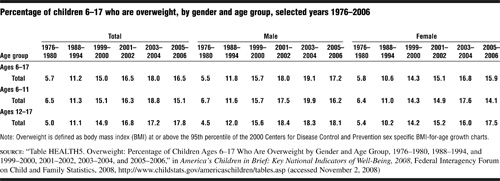
Health Disparities
A study, looking at years 2003 and 2007, pulled information from the National Survey of Children’s Health to calculate childhood obesity in the U.S. in kids ages 10 to 17. It found that in 2007, 16.4% of children were considered obese and 31.6% considered overweight. This was a 10% increase from 2003. The study also found that when they looked closer at the demographics, the obesity prevalence “increased by 23%–33% for children in low-education, low-income, and higher unemployment households.” Children from low-income and low-education households had 3.4 to 4.3 times higher chances of becoming obese than a higher socioeconomic household. This evidence suggest definite social inequalities that correlate with racial/ethnic and socioeconomic disparities in obese and overweight children in the U.S. (Singh, Siahpush, & Kogan, 2010).
Physical Effects
Physical fitness has a substantial positive impact on the youth of America. The National Association for Sport and Physical Education and the American Heart Association’s “Shape of the Nation Report” published literature highlighting the benefits of youth fitness (1). When a group of children who got at least sixty minutes of exercise a day, were compared to a group of mostly sedentary children, it was discovered that the children who exercised showed better health in a number of aspects. They had amazingly stronger cardiovascular and respiratory systems, sturdier bones, more powerful muscles, and showed less body fat. Fit children greatly decrease their chance of becoming obese when they reach adulthood where they can develop heart disease, high blood pressure, diabetes, and osteoporosis. Obesity can also cause cancers from an excess amount of fat cells in the body that can potentially mutate into something malignant (Janssen & LeBlanc, 2010). It is important to stop obesity at the start of it’s track, America’s youth.
Solutions
As true with the study above, current evidence points to recommendations that the average child should be physically active at least 60 minutes a day (2), either accumulated or all at once. But how do we convince children and their families to be more active? An effectiveness review of interventions done by the Community Preventive Services Task Force recommended(3) School-based Physical Education interventions, where Physical Education (PE) classes were modified to increase the amount of time spent on moderate to vigorous physical activity. These modifications could be done either by increasing the amount of time children spent in PE classes, or by increasing the activity levels in the class. Some schools have also come up with innovative ideas to incorporate physical activity into academic classrooms. One school district in Indiana, PA places small pedals under the desks of their students, allowing them to keep active while in class (4). This approach is useful for schools, as there is no federal law (5) requiring Physical Education to be offered to students or any incentive to states or schools to offer them besides student health. In fact, the 2011 Youth Risk Survey found that 69% of students surveyed did not attend PE classes daily, and 48% did not attend them weekly (5). While some may worry that increasing time spent in PE would take away from academic classes, the Task Force on Community Preventive Services found no evidence of academic harm (3) when physical education programs were increased. While individual schools and districts can make these efforts to increase the physical activity of their students, legislators and policy makers should also push for more mandatory activity levels in schools in order to guarantee that all of our youth can lead healthy lives.
During the school year of 2007-2008, four elementary schools in Arizona took upon a pilot program where schools were required to implement, at minimum, 150 minutes of physical activity per week for their students (6). After evaluation of this program, they determined that the levels of physical activity in students increased 17% at school and 6% at home. They also saw a 13% decrease in student absenteeism. These numbers, although modest, point towards a step in the right direction.With the rise in childhood obesity, it is more important than ever to get America’s children moving. Children of low socioeconomic status households are at greater risks and some schools are reducing the opportunities for children to get out of their classroom desks. With a rise in T.V. and video game use amongst the youth also playing a factor in promoting youth sedentation, it takes a combined effort on all parties involved in the development of America’s youth. Parents, to keep their children active through extra curricular activities and a reduction in T.V. and video game time; schools, to value physical education as much as academic education; and governments, to implement policies to combat childhood obesity. This battle, although turbulent, can be easily winnable through these proper strategies.
Hyperlinks:
References
Doak, Melissa. (2009).Percentage of children 6-17 who are overweight, by gender and age group,
selected years 1976-2006. Growing Up: Issues Affecting America's Youth. Detroit: Gale, Information Plus Reference Series. Web. 20 Nov. 2014.
Janssen, I., & LeBlanc, A. G. (2010). Systematic review of the health benefits of physical activity
and fitness in school-aged children and youth. International Journal of Behavioral
Nutrition and Physical Activity, 7(40), 1-16.
Singh, G. K., Siahpush, M., & Kogan, M. D. (2010). Rising social inequalities in US childhood
obesity, 2003–2007. Annals of epidemiology, 20(1), 40-52.
The fight against teen pregnancy is winnable
Teen pregnancy is an issue that affects thousands of Americans each year. Understanding the causes of this health issue can help drive research into new solutions to lower the teen pregnancy rate. One way to understand why and how teen pregnancy exists is to look at an ecological model (also called the Human Ecology Theory). According to Urie Brofenbrenner, there are five environmental systems that one can encounter throughout the lifespan that may influence behavior (refer to appendix A for representation). These systems start small (like the microsystem, which is the direct environment) all the way up to the Chronosytem, which includes socio-historical contexts and major cultural shifts (Brofenbrenner, 1994).
Subscribe to:
Posts (Atom)